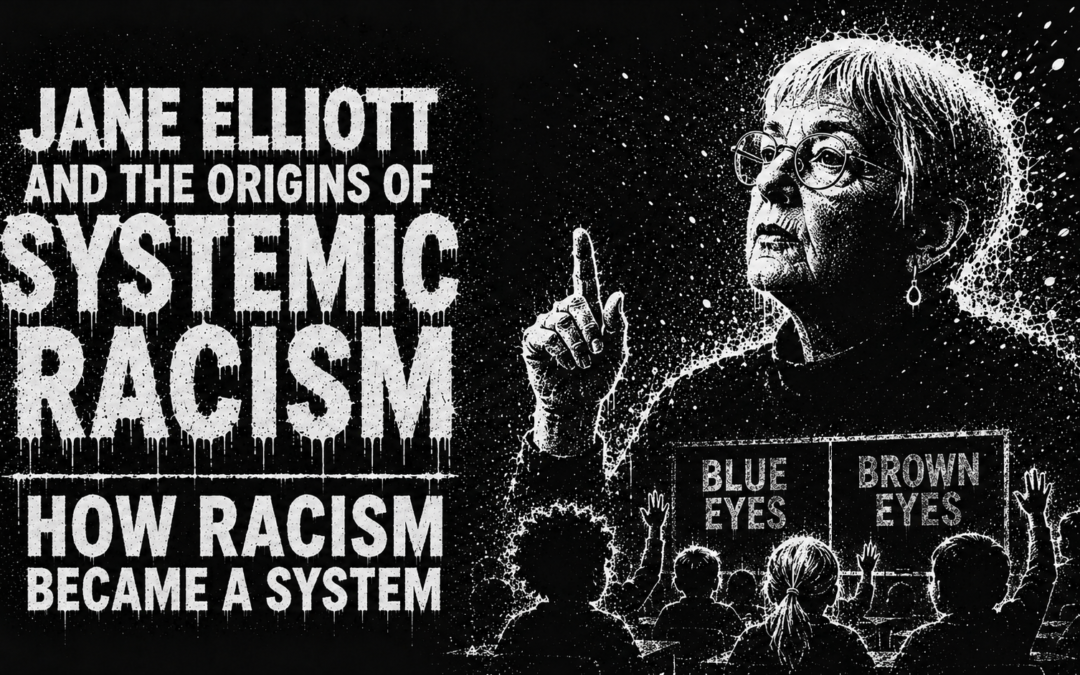
When educator Jane Elliott talks about racism, she often makes one important point: racism is not a natural human condition. It is something people created, taught and built into society.
Elliott became internationally known for her Blue Eyes Brown Eyes exercise, which she first conducted with her third grade students in 1968 after the assassination of Dr. Martin Luther King Jr.
By separating children according to eye color and temporarily giving one group privileges over another, Elliott demonstrated how quickly discrimination can affect behavior, confidence, performance and relationships.
But her larger message goes far beyond one classroom experiment.
Elliott has spent decades arguing that the idea of separate human races was used to justify unequal treatment and maintain social and economic power.
Jane Elliott on the Myth of Race
In a 2018 interview with Arizona PBS, Elliott made a powerful statement:
“We invented the myth of racism. There is only one race on the face of this earth.”
Her argument is that human beings created racial classifications and then attached ideas of superiority and inferiority to those classifications.
Once those beliefs became connected to laws, institutions, wealth and political power, racism became more than individual prejudice.
It became systemic.
How Did Systemic Racism Develop in America?
There was no single day when systemic racism suddenly appeared in America.
Instead, racial inequality developed over decades as colonial governments created laws that increasingly separated Europeans, Africans and Indigenous people.
One important example comes from colonial Virginia.
During the seventeenth century, European indentured servants and African laborers sometimes worked under overlapping systems of servitude. Their experiences were certainly not identical, and slavery already existed, but the racial boundaries that would later define American slavery were still developing.
Over time, those boundaries became much more rigid.
Historical records show that as early as 1640, Virginia courts were already treating African and European servants differently.
In the famous case of John Punch, three servants escaped together. The two European servants received additional years of service as punishment. John Punch, an African man, was sentenced to serve for the remainder of his life.
This is one of the early examples of racial differences being formally reflected in colonial law.
Bacon’s Rebellion and the Growth of Racial Division
Another major turning point came with Bacon’s Rebellion in 1676.
The rebellion was a complicated political and economic conflict in colonial Virginia. Poor European settlers, indentured servants, enslaved Africans and members of the colonial elite became involved in the uprising.
The rebellion also included brutal attacks against Indigenous communities, so it should not be remembered simply as a unified working class movement.
However, its aftermath is important to understanding the development of racial hierarchy.
During the following decades, Virginia created increasingly rigid distinctions between people of European and African ancestry.
Laws restricted the rights of Africans and their descendants while Europeans increasingly received legal and social advantages associated with being white.
Race was becoming connected to freedom, property, political participation and social status.
Racism Became More Than Personal Prejudice
This history helps explain the difference between prejudice and systemic racism.
A person can hold racist beliefs.
A system can do something much larger.
When racial distinctions influence laws, housing, education, employment, voting, policing, lending or access to wealth, discrimination can continue even when an individual person claims not to be prejudiced.
Jane Elliott addressed this distinction in a PBS interview when she explained that racism was not limited to obvious acts such as white supremacist violence.
She pointed instead to practices involving voting, housing, education, incarceration and financial redlining as examples of racism operating through institutions.
That is an important part of understanding systemic racism.
The Economic Side of Racism
Elliott has also connected racism with economics.
In a 2020 interview, she described racism as “profit making behavior.”
That statement raises an important question:
Who benefits when people are divided?
Throughout American history, racial hierarchy has frequently existed alongside economic hierarchy.
Enslaved labor generated enormous wealth.
Later discriminatory housing policies affected who could purchase homes and accumulate property.
Employment discrimination affected income.
Unequal access to education affected economic opportunity.
Racial inequality therefore cannot be understood only as a problem of individual attitudes.
It also has a material history.
Why Jane Elliott’s Blue Eyes Brown Eyes Exercise Still Matters
The children did not need generations to learn discrimination.
They needed an authority figure to tell them that one group was superior.
Once Elliott established the hierarchy, the favored children received privileges while the other children experienced discrimination.
The exercise was not intended to recreate the actual experience of racism. A temporary classroom exercise cannot reproduce generations of slavery, segregation or institutional discrimination.
Instead, it demonstrated how quickly arbitrary differences can acquire social meaning when authority, privilege and consequences are attached to them.
Racism Has to Be Taught
Perhaps the most important lesson from Jane Elliott's work is that racial superiority is learned.
Children are not born understanding racial hierarchies.
Societies teach people which differences supposedly matter.
Institutions can then reinforce those beliefs.
That means dismantling systemic racism requires more than simply telling people not to hate one another.
It requires understanding the history, laws, policies and institutions that allowed racial inequality to become embedded within society.
Understanding the Past Helps Us Recognize the Present
Jane Elliott did not invent the discussion about systemic racism, nor can the history of racism be reduced to one person, law or historical event.
But her work helped generations of people understand an important distinction.
Race may be a social construction, but the consequences of racism are very real.
The history of colonial America shows how racial categories gradually became connected to laws, rights, labor and economic power.
Understanding that history does not require blaming people living today for actions committed centuries ago.
It requires recognizing how systems are created, how they survive and how they can be changed.
That may ultimately be one of the most valuable lessons of Jane Elliott's work.
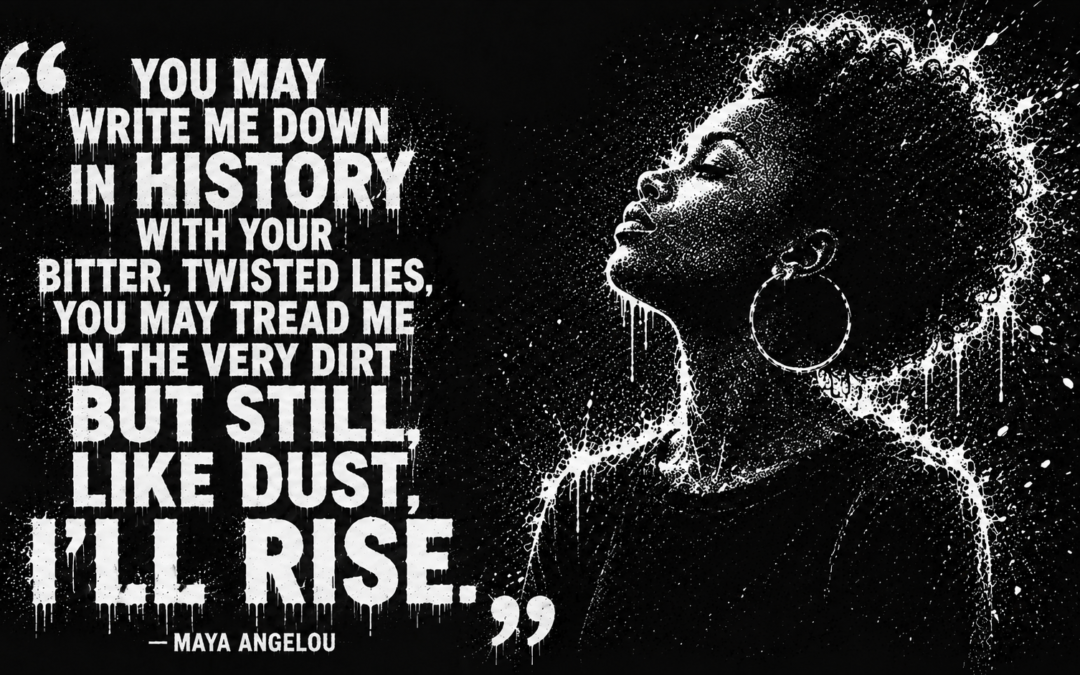
Maya Angelou's Still I Rise is one of the most recognized poems about resilience, confidence, and refusing to let other people determine your worth.
Published in 1978 in her collection And Still I Rise, the poem speaks directly to people who have experienced discrimination, rejection, criticism, hardship, or attempts to make them feel less valuable.
Its message remains relevant today: what happens to you can affect you, but it does not have to define you.
What Is Still I Rise About?
Still I Rise addresses the determination to move forward despite oppression and attempts to diminish someone's dignity.
Angelou writes:
"But still, like dust, I'll rise."
That short statement captures one of the central ideas of the poem. Other people may judge you, underestimate you, or try to control the story told about you, but you still have the ability to decide what happens next.
The poem has particular significance when understood through Angelou's experience as a Black woman in America. It confronts racism, sexism, historical oppression, and the treatment of Black women while presenting confidence as something that does not require anyone else's permission.
Why Still I Rise Connects With So Many People
Although the poem has an important historical and cultural context, its message also connects with many everyday experiences.
People experience rejection in relationships. They lose jobs. Families become difficult. Friendships end. Businesses fail. People face discrimination. Others spend years dealing with criticism that slowly damages their confidence.
These experiences can influence how you see yourself if you allow other people's behavior to become evidence of your value.
Still I Rise challenges that thinking.
Someone failing to recognize your abilities does not mean those abilities do not exist.
Your worth should not depend entirely on whether other people recognize it.
The Confidence Behind Still I Rise
One of the most memorable questions Angelou asks is:
"Does my sassiness upset you?"
The question is important because it addresses what can happen when someone becomes comfortable with their own confidence.
Not everyone will respond positively.
People who benefited from your silence may dislike your boundaries. People who underestimated you may be uncomfortable when you become more confident. Someone who expected you to seek their approval may react differently when you stop needing it.
That does not mean confidence should become arrogance.
It means you do not have to make yourself smaller simply to make someone else more comfortable.
Rising Does Not Mean Pretending Everything Is Fine
Resilience is sometimes presented as staying positive regardless of what happens. That is not what healthy resilience requires.
You can recognize that someone treated you badly.
The important question is what you do afterward.
Angelou writes:
"I rise I rise I rise."
The repetition reinforces the poem's central message. Difficult experiences can become part of your history without becoming the permanent definition of your future.
What Still I Rise Can Teach Us Today
The poem offers several practical lessons that remain useful decades after it was published.
Stop building your identity around other people's opinions. Feedback can be valuable, but constantly seeking approval can make your confidence dependent on people you cannot control.
Set stronger boundaries. You do not have to maintain relationships that repeatedly damage your self respect.
Separate failure from identity. Failing at something does not make you a failure. It means something did not work and you now have more information for your next decision.
Allow yourself to move forward. You do not need to remain emotionally attached to an old version of your life simply because you invested time in it.
Build confidence through action. Confidence becomes stronger when you keep promises to yourself, make difficult decisions, develop useful skills, and learn that you can recover when things do not go according to plan.
Why Maya Angelou's Still I Rise Still Matters
More than four decades after its publication, Still I Rise continues to reach new generations because people still struggle with discrimination, rejection, self doubt, unhealthy relationships, social expectations, and pressure to seek approval.
Social media has added another layer. Likes, comments, followers, appearance, money, relationships, and career achievements can easily become measurements of personal worth.
They are not.
Your value cannot be accurately measured by how many people approve of you.
That is one reason Angelou's message continues to matter.
All in All
Maya Angelou's Still I Rise is more than a famous inspirational poem. It is a statement about dignity, identity, resilience, and refusing to allow oppression or other people's opinions to have the final say over your life.
Dealing with family members who constantly ask for money can become stressful, especially when they respond to financial boundaries by blaming you, guilt-tripping you, or portraying themselves as the victim.
Helping family occasionally is normal. However, repeated requests for money can develop into an unhealthy pattern when a relative begins to expect financial support, refuses to accept "no," or uses emotional pressure to get what they want.
In some situations, setting a firm financial boundary is enough. In others, you may decide to block a family member's phone number or reduce contact to protect yourself from repeated pressure.
This article explains how to recognize unhealthy financial behavior in families, why some relatives play the victim when you stop giving them money, and how to set boundaries without getting pulled into repeated arguments.
Why Do Family Members Keep Asking for Money?
There are legitimate reasons someone may need financial help. Job loss, unexpected bills, housing problems, illness, or other emergencies can put almost anyone in a difficult position.
The problem is not necessarily that a family member asks for help.
The problem begins when asking becomes an ongoing expectation.
Warning signs can include:
Frequently asking you to lend or give them money
Contacting you mainly when they need financial help
Creating repeated "emergencies"
Expecting you to pay bills or cover expenses
Becoming angry when you say no
Reminding you of things they have done for you in the past
Claiming you do not care about them because you will not give them money
Involving other relatives to pressure you
Refusing to take reasonable steps to improve their financial situation
When these behaviors become repetitive, you may no longer be dealing with a simple request for help. You may be dealing with financial manipulation within the family.
When a Family Member Plays the Victim After You Say No
One common problem occurs when a relative changes the focus of the conversation after you refuse to give them money.
Instead of discussing the financial request, they may make the issue about your character.
They might say things such as:
"You don't care about your family."
"After everything I've done for you, you can't help me?"
"You have money. Why are you being selfish?"
"Family is supposed to help family."
They may also tell other relatives that you refused to help them while leaving out important details, such as how many times you have already provided money.
This behavior can make you feel guilty and cause you to reconsider a reasonable boundary.
It is important to separate someone's disappointment with your decision from your responsibility for their situation.
A family member being upset about your boundary does not automatically mean the boundary is unfair.
Financial Help Can Turn Into Financial Dependence
Repeatedly giving money to a family member can unintentionally create dependency.
If someone learns that another person will repeatedly cover overdue bills, rent, groceries, debt payments, transportation costs, or other expenses, there may be less pressure for them to address the underlying financial problem.
This does not mean you should never help family.
It means financial help should have limits.
Before giving money, consider whether you are helping someone through a temporary situation or becoming responsible for expenses that they should eventually manage themselves.
If you have already provided significant help and the requests continue, giving more money may simply continue the same cycle.
How to Set Financial Boundaries With Family
A financial boundary should be clear and easy to understand.
For example:
"I'm not able to give or lend you any more money."
You do not necessarily need to explain your income, savings, bills, bank balance, investments, or future plans.
Providing too much financial information can actually create additional arguments.
A relative might respond:
"But you can afford it."
"You just bought something for yourself."
"You have savings."
"You're making more money now."
The discussion then becomes about whether they believe you have enough money to give them.
That is not the issue.
The issue is that you have decided not to provide additional financial support.
Your financial situation does not have to reach a crisis before you are allowed to say no.
Stop Repeatedly Explaining Your Boundary
One mistake people often make is believing that they need to find the perfect explanation.
They explain why they cannot give money.
The family member argues.
They provide another explanation.
The family member finds another objection.
Soon, a simple boundary becomes a long argument.
You can instead use a short response:
"I've already made my decision. I'm not discussing money anymore."
If the person continues asking, you do not have to continue responding.
Boundaries become more effective when they are consistently enforced.
Should You Block a Family Member's Number?
Blocking a family member can be appropriate when normal boundaries repeatedly fail.
You might consider blocking or temporarily blocking their number if they:
Continue calling or texting after you have asked them to stop
Repeatedly ask for money after you have clearly said no
Send insulting or abusive messages
Use guilt or threats to pressure you
Contact you from multiple numbers after being blocked
Encourage other relatives to contact you on their behalf
Make you anxious every time your phone rings
Refuse to communicate with you unless the conversation involves money
Blocking does not necessarily have to be permanent.
Some people temporarily block a relative until the conflict settles. Others decide that long-term or permanent no contact is necessary because the behavior continues.
The appropriate boundary depends on the situation.
Blocking Someone Is Different From Punishing Them
There is an important difference between blocking someone to control their behavior and blocking someone to control their access to you.
Blocking someone because you want them to panic, apologize, or chase you is different from blocking repeated unwanted communication.
A healthier reason might be:
"I have already communicated my boundary, and the person continues contacting me about money. I am blocking the number because I no longer want to participate in those conversations."
You cannot control whether another adult agrees with your boundary.
You can control whether you continue answering their calls and messages.
What If Other Family Members Get Involved?
Financial disputes can quickly spread through families.
A relative may contact siblings, parents, cousins, or other family members and present themselves as the victim.
You may then receive messages asking why you will not help.
Avoid turning the situation into a family-wide debate.
A simple response may be enough:
"This is a private financial matter between us. I've made my decision and I'm not discussing it with other family members."
You also do not have to prove how much money you previously gave or explain every interaction.
If another relative believes the person needs financial assistance, that relative can decide whether they personally want to provide it.
You are not automatically responsible because someone else believes you should pay.
Watch for Financial Guilt-Tripping
Financial guilt-tripping can take several forms.
A relative may compare your financial situation with theirs. They may mention your job, home, purchases, savings, vacations, or other signs that they believe you have money available.
They may also bring up childhood sacrifices or previous favors.
Past generosity does not automatically create a permanent financial debt between family members.
Healthy family relationships should not require one person to continually prove their love by providing money.
You Are Allowed to Say No to Lending Money
Many family conflicts happen because the person asking for money sees the request as reasonable while the person being asked feels pressured.
You are allowed to decide:
How much financial help you are comfortable providing
Whether you lend money at all
Whether previous loans must be repaid before additional help is considered
Whether you give gifts instead of loans
Whether you stop providing financial support completely
Whether you discuss your finances with relatives
Whether continued financial pressure results in reduced contact
Having money available does not mean someone else is entitled to it.
What to Do After Blocking a Family Member
If you decide to block someone, avoid repeatedly checking whether they tried to contact you or asking other relatives what they are saying.
The purpose of reducing contact is to reduce the conflict.
Use the time to evaluate the relationship more objectively.
Ask yourself whether communication can eventually resume without financial pressure.
If you decide to reconnect, you can establish the boundary before regular communication resumes:
"I'm willing to stay in contact, but I will not discuss giving or lending money. If the requests start again, I will end the conversation."
Then follow through consistently.
When Family Financial Pressure Becomes Harassment
Repeated requests for money can sometimes escalate beyond ordinary family conflict.
Take the situation more seriously if someone begins making threats, repeatedly contacting you after being told to stop, showing up unexpectedly, attempting to access your financial accounts, impersonating you, taking money without permission, or using intimidation.
Keep records of concerning messages and financial transactions where appropriate.
Depending on the seriousness of the behavior, you may also want to seek professional, legal, financial, or other appropriate support.
You Can Help Family Without Becoming Their Financial Safety Net
Supporting family and maintaining financial boundaries are not mutually exclusive.
You can care about someone's situation without agreeing to finance it.
In some cases, non-cash assistance may be more useful. You might provide information about employment opportunities, budgeting resources, community assistance programs, debt counselling, or other services rather than repeatedly providing money.
But even those forms of assistance are optional.
Adults are ultimately responsible for managing their own financial lives.
Final Thoughts: Protect Your Money and Your Boundaries
If a family member keeps asking you for money, becomes angry when you refuse, plays the victim, or tries to make you feel guilty, pay attention to the pattern rather than focusing only on the latest request.
Set a clear financial boundary.
Avoid repeatedly defending your decision.
Do not disclose financial information simply to prove that you have a legitimate reason to say no.
And if the person refuses to respect your boundary, reducing contact or blocking their phone number may be a reasonable next step.
Family relationships can survive healthy boundaries. In fact, boundaries often reveal whether the relationship can exist without money being at the center of it.
You can care about your family while still protecting your finances, privacy, time, and emotional wellbeing.
Slavery did not disappear. It changed its appearance.
There may be no visible chains. There may be no public auction blocks. Yet around the world, millions of human beings are still being controlled, exploited, threatened, trafficked, forced to work, or forced into marriages they did not choose.
Behind many of those numbers are women and children whose freedom has been taken from them.
According to Walk Free's Global Slavery Index, an estimated 50 million people were living in modern slavery on any given day in 2021. Approximately 27.6 million were in forced labour and 22 million were living in forced marriages. More than 12 million were children, while women and girls represented 54 percent of people living in modern slavery.
These are staggering numbers.
But we must remember that they are not merely numbers.
They are people.
They are daughters. Mothers. Sisters. Sons. Children with dreams. Women who deserve autonomy over their bodies and futures. Human beings who deserve the same fundamental thing every one of us deserves:
Freedom.
What Is Modern Slavery?
Modern slavery is an umbrella term encompassing severe forms of exploitation, including forced labour, human trafficking and forced marriage.
It can exist when someone is manipulated, threatened, deceived or coerced into a situation they cannot realistically refuse or escape.
Sometimes the control is physical.
Other times, the chains are psychological, financial or social.
A person's identification documents may be taken away. Their wages may be withheld. They may be threatened with violence, deportation or harm to their family. Someone may be trapped by debt, isolated from people who could help, or manipulated into believing escape is impossible.
This is one reason modern slavery can remain hidden even when it is happening around us.
Why Women and Girls Are Particularly Vulnerable
Modern slavery affects people of every gender, but inequality and discrimination create particular vulnerabilities for women and girls.
Forced marriage is one striking example.
Women and girls account for approximately 68 percent of people in forced marriages. Walk Free's research also reports that family members are frequently responsible for coercion: 73 percent of people in forced marriages were forced to marry by their parents, with another 16 percent forced by other relatives.
This reminds us that exploitation does not always begin with a stranger.
Sometimes control can exist behind the doors of homes, families and communities.
Economic inequality can deepen that vulnerability. When women lack equal access to education, employment, property, financial resources or legal protection, escaping an abusive or exploitative situation can become considerably harder.
A woman without money, documents, safe housing or a support network may technically be "free" under the law while having very few realistic avenues of escape.
The Children Hidden Behind the Statistics
Perhaps one of the most disturbing realities is that more than 12 million people living in modern slavery are children.
Childhood should be a time for learning, imagination, play and discovering who you are.
For millions of children, exploitation steals that childhood.
Children may be pushed into forced labour, domestic servitude, commercial sexual exploitation, forced marriage and other forms of abuse. Some forms of exploitation are also difficult to capture fully in global estimates. Walk Free notes that the estimates do not encompass every form of modern slavery, including recruitment of children by armed forces and all child marriages.
This means even horrifying global statistics may not reveal the entire picture.
Children are particularly vulnerable because they depend on adults for food, shelter, protection and survival.
A child cannot simply "walk away" from exploitation in the same way we might imagine an independent adult could.
When the very people or systems responsible for protecting a child become sources of exploitation, escape becomes even more difficult.
Poverty, Conflict and Displacement Create Fertile Ground for Exploitation
Modern slavery does not exist in isolation.
It thrives where vulnerability grows.
Conflict can destroy homes, separate families and weaken the institutions people depend upon for protection. Poverty can leave families desperate for income. Migration can place people in unfamiliar countries where they may not understand their rights or speak the language.
Climate pressures, economic instability, disrupted education and forced migration can further increase vulnerability.
Walk Free reports that the number of people living in modern slavery increased by approximately 10 million between 2016 and 2021. The organization points to overlapping crises, including conflict, environmental degradation, economic disruption, extreme poverty and unsafe migration, as factors that can heighten vulnerability to exploitation.
When people become desperate, predators often recognize opportunity.
A promise of employment can become forced labour.
A promise of transportation can become trafficking.
A promise of marriage can become control.
A promise of a better life can become a nightmare.
Modern Slavery Is Not Just "Somewhere Else"
One of the most dangerous misconceptions is believing modern slavery exists only in impoverished or developing countries.
It does not.
According to the Global Slavery Index, modern slavery occurs in every country, regardless of wealth. More than half of forced labour and approximately one-quarter of forced marriages are found in upper-middle-income or high-income countries.
That changes the conversation.
Modern slavery is not simply a problem happening somewhere far away.
It can exist within agriculture, domestic work, manufacturing, construction, hospitality and other industries. It can hide within global supply chains and behind ordinary products and services.
The person experiencing exploitation may be closer than we think.
The Hidden Cost of What We Consume
Modern slavery also forces us to ask uncomfortable questions about the global economy.
Who made our clothes?
Who harvested the ingredients in our food?
Who extracted the minerals used in our electronics?
Who performed the labour behind the products arriving at our doors?
Consumers cannot realistically investigate every individual worker behind every purchase. Governments and corporations therefore carry an enormous responsibility to ensure that exploitation is not embedded within supply chains.
Walk Free warns that interconnected global supply chains increase exposure to exploitation and argues that stronger accountability is necessary to eliminate these hidden forms of slavery.
Cheap goods can sometimes carry a human cost that never appears on the price tag.
Why "Just Leave" Is Not an Answer
When discussing exploitation, trafficking or abusive relationships, people sometimes ask:
Why didn't they just leave?
But freedom is much more complicated when another person controls the conditions of your survival.
Imagine having no money.
No identification.
No safe home.
No transportation.
No knowledge of the local language.
No family nearby.
Now imagine being told that if you leave, you will be arrested, deported, harmed, or someone you love will suffer.
Suddenly, "just leave" doesn't sound so simple.
Understanding coercion requires us to stop judging people from the comfort of circumstances they may never have had.
Freedom Requires More Than Rescue
Ending modern slavery cannot simply mean removing someone from an exploitative situation.
Survivors may need safe housing, medical care, psychological support, education, employment, legal assistance, financial resources and long-term protection.
Without those foundations, vulnerability can continue.
Walk Free notes that while more countries have criminalized forced marriage, many governments still lack a comprehensive response addressing underlying causes and survivor needs such as safe accommodation, emergency financial assistance, civil protections and psychosocial support.
Freedom must therefore mean more than opening a door.
It must mean giving someone the resources and power to walk through that door and build a life beyond it.
What Must Change
Governments must strengthen and enforce laws against trafficking, forced labour and forced marriage.
Businesses must examine their supply chains instead of benefiting from willful ignorance.
Communities must challenge traditions and social structures that treat women and girls as possessions rather than autonomous human beings.
Education must help children recognize exploitation and understand that their bodies and futures belong to them.
Survivors must be listened to when policies and programs are created.
And as individuals, we can educate ourselves, support credible anti-slavery organizations, question companies about supply-chain transparency, recognize signs of exploitation and refuse to normalize systems that depend upon the powerlessness of others.
But there is something even deeper that must change.
We must stop measuring human worth by usefulness, productivity, gender, poverty, immigration status or social position.
No Human Being Is Property
At its core, slavery begins with a devastating belief:
That one human being has the right to control another.
Everything else grows from there.
When women are treated as commodities, exploitation becomes easier.
When children are treated as labour instead of human beings with rights, exploitation becomes easier.
When poverty makes someone's suffering invisible, exploitation becomes easier.
When consumers care more about low prices than the people producing what they buy, exploitation becomes easier.
When society looks away, exploitation becomes easier.
Modern slavery survives partly because so much of it remains unseen.
That is why awareness matters.
Not awareness that lasts for five minutes after reading a statistic, but awareness that changes how we see other human beings.
Their Freedom Is Our Responsibility
Fifty million people are living in modern slavery, including more than twelve million children and millions of women and girls. The scale of this injustice can feel overwhelming, but enormous injustices have always depended, in part, on ordinary people believing there is nothing they can do to create change. There is. We can refuse indifference, demand accountability, support organizations fighting exploitation, listen to survivors, teach young people about consent, boundaries, and human rights, and challenge the systems that make vulnerable people easier to exploit.
And above all, we can continue saying something that should never need to be said, yet must be repeated until slavery truly belongs to history:
No woman is property.
No child is property.
No human being was born to be owned, controlled, bought, sold or exploited.
Freedom is not a privilege reserved for the fortunate.
Freedom is a human right.
Source & Further Reading
This article draws on findings from Walk Free's Global Slavery Index, including its global estimates and research on forced labour, forced marriage, children, women and girls.
If you believe someone may be experiencing trafficking or exploitation, contact appropriate local authorities or a reputable anti-trafficking organization in your country. When there is immediate danger, contact local emergency services.
There are seasons in life when it feels as though every door has closed.
The job doesn't work out. The relationship ends. The opportunity disappears. The business slows. The dream you've held onto for years suddenly feels out of reach. You pray, you plan, you knock, and yet every door remains firmly shut.
In those moments, it's easy to believe life is working against you.
But what if it's actually working for you?
Closed Doors Are Not Always Rejection
Most of us see closed doors as failure. We interpret them as signs that we aren't good enough, worthy enough, or capable enough. We assume we've taken a wrong turn.
Yet some of the greatest transformations begin the moment the familiar path disappears.
A closed door doesn't always mean "no."
Sometimes it means, "Not this way."
Life has an incredible way of redirecting us when we've become attached to a destination that no longer serves our highest growth. We may not understand it in the moment, but often what feels like rejection is actually protection, or preparation.
The Comfort of the Familiar
Human beings naturally cling to certainty. We stay in careers we've outgrown, relationships that no longer nourish us, and routines that keep us comfortable because they are familiar.
Even when we know something isn't aligned anymore, we often hesitate to leave because the unknown feels frightening.
Then life steps in.
The doors begin to close.
Not as punishment, but as an invitation.
An invitation to discover a version of yourself that could never emerge if you stayed where you were.
The New Path Is Rarely Visible
One of the hardest parts about transition is that life rarely shows us the entire map.
Instead, it offers only the next step.
We want certainty before we move.
Life asks us to move before certainty arrives.
This requires trust.
Not blind optimism, but the willingness to believe that every experience—even the painful ones—is contributing to something greater than we can currently see.
Looking back, many people realize that the moments they once called their greatest failures became the turning points that led them toward deeper purpose, stronger character, healthier relationships, or unexpected opportunities.
Growth Often Begins With Loss
Every meaningful transformation asks us to release something.
Sometimes it's an identity.
Sometimes it's a dream.
Sometimes it's the person we thought we were supposed to become.
Loss creates space.
When something leaves your life, it also creates room for something new to enter. The difficulty is that there is often a period where nothing seems to be happening.
This space can feel empty.
Yet emptiness is not absence.
It is possibility.
The seed grows underground long before it breaks through the surface.
What If the Closed Door Is Actually a Compass?
Imagine standing in a hallway filled with locked doors.
You could spend years trying to force one open.
Or you could turn around and notice the hallway itself is guiding you somewhere entirely different.
Life doesn't always remove opportunities because you've failed.
Sometimes it removes them because they no longer fit the person you're becoming.
The path ahead may not resemble the one you imagined years ago.
It may be smaller before it becomes larger.
It may be slower before it becomes more meaningful.
It may require courage instead of certainty.
But that doesn't mean it's the wrong path.
It may be the path that finally leads you home to yourself.
Moving Forward When Nothing Makes Sense
If every door seems closed right now, resist the urge to see your life as over.
Instead, ask yourself:
What am I being invited to let go of?
What lesson keeps repeating?
What fear is preventing me from exploring a different direction?
What possibilities have I ignored because they weren't part of my original plan?
Sometimes the answers don't arrive immediately.
That's okay.
Growth doesn't always happen through dramatic breakthroughs. Often, it unfolds through small, faithful steps taken one day at a time.
All in All
When all the doors close, don't assume your journey has ended.
It may simply be changing direction.
The universe, life, or whatever you choose to believe in has a way of leading us beyond the limits of our own expectations. The path we resist often becomes the path that transforms us.
So instead of asking, "Why is every door closed?"
Try asking, "What new path is asking to be discovered?"
Because sometimes the greatest blessing isn't finding the door that finally opens.
It's becoming the person who no longer needs the old doors at all.
Remember:Every closed door is an invitation to trust the path that cannot yet be seen. Walk forward anyway. The next chapter may be waiting just beyond the route you never planned to take.
The ego is not your enemy...it is your survival mechanism. But when it becomes your master instead of your servant, it can quietly block your peace, purpose, and spiritual growth.
Have you ever wanted to change your life, follow your dreams, forgive someone, or simply feel at peace, but something inside kept pulling you back?
That voice may not be your intuition.
It may be your ego.
Understanding the ego is one of the most transformative steps on a spiritual journey because the ego often disguises itself as wisdom, logic, and self-protection. In reality, it is usually protecting an outdated version of who you believe you are.
Let's explore what the ego really is and why learning to move beyond it can change everything.
What Is the Ego?
The ego is the identity you have built throughout your life.
It is made from:
Your beliefs
Your memories
Your fears
Your successes and failures
Your labels
Other people's opinions of you
The ego constantly asks:
"How do I look?"
"Am I good enough?"
"What if I fail?"
"What will people think?"
"How can I stay safe?"
Its primary purpose is survival, not happiness.
Thousands of years ago, this survival instinct helped human beings avoid danger. Today, however, the ego often treats emotional discomfort as if it were physical danger.
Starting a new career feels dangerous.
Being vulnerable feels dangerous.
Speaking your truth feels dangerous.
Growing spiritually feels dangerous.
So the ego resists.
The Ego Isn't Evil
Many spiritual teachings speak about "destroying the ego."
That isn't necessary.
The ego is simply a tool.
Like fire, it can either cook your food or burn your house down.
A healthy ego helps you:
Set healthy boundaries
Protect yourself from genuine harm
Build confidence
Navigate daily life
An unhealthy ego controls your decisions through fear, comparison, pride, insecurity, and attachment.
The goal isn't to eliminate the ego.
The goal is to become aware of it.
How the Ego Keeps You Stuck
The ego loves familiarity.
Even if your current situation makes you unhappy, the ego often prefers what is familiar over what is unknown.
It whispers:
"Stay where it's comfortable."
"Don't take that chance."
"You're too old."
"You're not talented enough."
"Someone else is already doing it."
"People will judge you."
Over time, these thoughts become invisible habits.
You stop questioning them.
You simply believe them.
Signs Your Ego Is Running Your Life
You may be operating from the ego if you frequently:
Compare yourself to others
Need constant validation
Fear criticism
Hold onto resentment
Feel offended easily
Need to always be right
Judge others harshly
Fear making mistakes
Chase external success but still feel empty
Constantly seek approval before making decisions
The ego is always looking outside itself for worth.
Your authentic self already knows your worth.
The Difference Between Ego and Your True Self
Imagine the sky.
Now imagine clouds moving across it.
The clouds are your thoughts, emotions, fears, and ego.
The sky is your true consciousness.
The clouds come and go.
The sky remains.
Your true self is peaceful, compassionate, creative, loving, and deeply connected to life.
The ego is loud.
Your higher self is quiet.
The ego reacts.
Your higher self responds.
The ego fears lack.
Your higher self trusts abundance.
Why the Ego Fears Spiritual Growth
Every spiritual awakening asks you to release an old identity.
That feels threatening to the ego.
The ego asks:
"If I'm not my job, who am I?"
"If I'm not my past, who am I?"
"If I'm not my pain, who am I?"
"If I'm not what other people think of me, who am I?"
The answers cannot be found through thinking alone.
They are discovered through experience.
Through stillness.
Through presence.
Through awareness.
How to Quiet the Ego
You don't silence the ego by fighting it.
You observe it.
When fearful thoughts arise, simply ask:
Who is speaking right now?
Is it fear?
Or is it wisdom?
Here are simple daily practices that weaken the ego's grip:
1. Practice Mindfulness
Notice your thoughts without becoming them.
You are the observer—not every thought that appears.
2. Spend Time in Silence
The ego thrives on constant distraction.
Silence allows your deeper wisdom to emerge.
3. Let Go of Comparison
Your journey was never meant to look like anyone else's.
Growth is personal.
4. Practice Gratitude
The ego focuses on what is missing.
Gratitude shifts your awareness to what is already abundant.
5. Forgive
The ego keeps score.
The soul seeks freedom.
Forgiveness releases the weight you've been carrying—not because someone else deserves it, but because you deserve peace.
6. Question Your Beliefs
Whenever fear appears, ask:
"Is this absolutely true?"
Often, you'll discover the ego has been telling an old story, not reality.
The Freedom Beyond Ego
Life becomes lighter when you stop trying to prove yourself.
You no longer need to compete.
You no longer need everyone to agree with you.
You no longer measure your value by possessions, titles, followers, or approval.
Instead, you begin living from authenticity.
From love instead of fear.
From presence instead of pressure.
That is where true freedom begins.
All in All
The ego will probably never disappear completely, and that's okay.
Its voice may always be there.
But it doesn't have to drive your life.
The more awareness you cultivate, the easier it becomes to recognize when the ego is speaking and when your deeper wisdom is guiding you.
You are not your fears.
You are not your past.
You are not the stories your mind repeats.
Beneath all of that is a quieter, wiser presence that has always been there.
When you learn to trust that presence, life begins to unfold with greater peace, clarity, and purpose.
And perhaps that is the greatest spiritual journey of all, not becoming someone new, but remembering who you truly are.
Predators don't only target children. They target adults, often smart, capable, kind adults because kindness is exactly what they're looking for. If you've ever walked away from an interaction feeling uneasy but couldn't say why, your instincts were already doing their job.This article is about learning to listen to them.
Predators Don't Look Like Predators
This is the part most people get wrong. We're taught to watch for someone who seems "off." But the people who do the most damage are usually charming, attentive, and quick to earn trust. That's the strategy, not an accident.
Common tactics to recognize:
Love bombing: intense affection, attention, or generosity early on, designed to lower your guard fast.
Isolation: subtly pulling you away from friends, family, or other support systems.
Boundary testing: small violations first ("just this once") to see if you'll say something.
Manufactured urgency: pressure to decide, trust, or commit right now, before you've had time to think.
Guilt and blame-shifting: making you feel responsible for their behavior or your own discomfort.
If something feels wrong, it doesn't need to look wrong to a stranger for you to trust it.
Your Instincts Are Not Paranoia
Many survivors describe the same thing afterward: I knew something was off, and I talked myself out of it. We're socialized, especially women to prioritize politeness over safety. To not "make it weird." To give people the benefit of the doubt even when our body is already saying no.
Unlearning that isn't rude. It's self-preservation.
A few reframes that help:
Discomfort is information, not an overreaction.
You don't owe anyone an explanation for your boundaries.
"I don't know them well enough to explain why" is a complete sentence.
Boundaries That Actually Hold
A boundary only works if you're willing to enforce it. That means deciding in advance before you're in an uncomfortable moment, what you will and won't accept.
Practical boundary-setting:
Name it early. Say what you're comfortable with before someone crosses a line, not after.
Watch the reaction, not just the words. Someone who respects a boundary adjusts. Someone who pushes, sulks, or punishes you for setting it is showing you who they are.
Keep a paper trail. Screenshots, dates, and details matter if a pattern of harassment or coercion ever needs to be reported.
Have an exit line ready. A rehearsed phrase: "I have somewhere to be". This phrase removes the need to improvise under pressure.
Tell someone. Predators rely on secrecy. A friend who knows where you are, who you're meeting, and when to check in closes that gap.
Building a Support Network Predators Can't Get Around
Isolation is one of the most common tools used against adults, especially in relationships that turn controlling or abusive. The antidote is staying connected.
Keep at least one or two people you check in with regularly, no matter what.
Trust the friend who says "something feels off about him," even if you can't see it yet.
If someone in your life discourages those other relationships, treat that as a red flag, not a coincidence.
If You've Already Been Targeted: You're Not Weak, You're Human
If you're reading this because something already happened to you, here's the truth worth holding onto: predators are skilled at what they do. Being deceived by someone who studies deception is not a character flaw. It's not proof you're careless or naive. It's proof you're human, and they were calculating.
Healing doesn't mean forgetting. It means taking back the parts of yourself that fear tried to shrink your trust, your voice, your right to take up space in the world without apology.
That's the story worth telling. Not just how you survived it, but who you became on the other side of it.
Resources If You Need Them
RAINN National Sexual Assault Hotline: 1-800-656-4673
National Domestic Violence Hotline: 1-800-799-7233
Love Is Respect (for relationship abuse, any age): 1-866-331-9474
Sometimes love remains, even when the relationship cannot.
One of the hardest truths to accept about relationships is that love does not always mean two people are meant to stay together.
We are often taught that if you truly love someone, you fight for them. You work through the problems. You stay. You hold on.
But life is rarely that simple.
Sometimes, you can love someone deeply and still know that you need to walk away.
And that does not make the love any less real.
Love and Compatibility Are Not the Same Thing
You can love someone's heart and still struggle to build a life with them.
You can care about someone and realize that your needs are no longer being met.
You can share beautiful memories and still recognize that the relationship has become painful, unhealthy, stagnant, or simply no longer aligned with who you are becoming.
Two people may genuinely love one another but want very different lives.
One may want commitment while the other wants freedom.
One may be ready to grow while the other is comfortable staying where they are.
There may be differences in communication, emotional needs, values, priorities, intimacy, trust, or visions for the future.
And sometimes there isn't a dramatic reason at all.
No betrayal.
No villain.
No terrible final argument.
Sometimes two people simply grow in different directions.
That can be one of the most painful endings because there is still love there.
Sometimes Love Is Not Enough
This can be difficult to accept.
We want love to conquer everything.
But a healthy relationship requires more than love. It also needs trust, respect, communication, emotional safety, compatibility, effort, honesty, and the willingness of both people to nurture the relationship.
You can love someone and still feel lonely beside them.
You can love someone and know that you are losing yourself trying to make the relationship work.
You can love someone and recognize that you keep having the same conversations, experiencing the same disappointments, and reopening the same wounds.
At some point, you may have to ask yourself:
Am I holding onto this relationship because it is still right for me—or because I am afraid to let go of someone I love?
Those are two very different things.
Walking Away Doesn't Mean You Never Loved Them
When a relationship ends, we sometimes rewrite its entire history.
Maybe it wasn't real.
Maybe I never loved them.
Maybe they never loved me.
Maybe all those years meant nothing.
But an ending does not erase everything that came before it.
Something can be meaningful without lasting forever.
A relationship can have brought joy, companionship, lessons, growth, laughter, intimacy, and beautiful memories into your life—and still eventually come to an end.
You do not have to turn someone into a bad person to justify leaving them.
And you do not have to convince yourself that you never loved them in order to move forward.
You can simply acknowledge:
I loved you. Maybe part of me still does. But this relationship is no longer where I belong.
Both truths can exist at the same time.
It's Never Easy to Leave Someone You Still Love
Walking away when you are angry can sometimes feel easier.
Walking away when you still care is different.
Your heart may constantly remind you of the good moments.
The late-night conversations.
The inside jokes.
The familiar voice.
The routines you built together.
The person you used to call when something wonderful—or terrible—happened.
You may miss them even though you know leaving was necessary.
You may wonder whether you made a mistake.
You may remember the best version of the relationship and temporarily forget the reasons it ended.
This is part of grief.
Missing someone does not automatically mean you should return to them.
Loving someone does not automatically mean the relationship should be restored.
Sometimes your heart needs more time to accept what your mind already understands.
You Can Miss Someone and Still Choose Yourself
Healing becomes confusing when we believe moving on requires us to stop caring.
It doesn't.
You can wish someone well from a distance.
You can be grateful for what you shared.
You can remember them fondly.
You can even carry love for them while building a completely different life.
Letting go is not always about eliminating love.
Sometimes it is about releasing your attachment to what you hoped the relationship would become.
There is a difference between loving someone and needing to have them in your life.
Learning that difference can change everything.
Don't Confuse Familiarity With Destiny
After a breakup, familiarity can feel like a sign.
You know this person.
They know you.
You understand their habits, their moods, their expressions, their history.
Starting over with someone new—or simply being alone—can feel frightening compared with returning to what is familiar.
But familiar does not always mean right.
And uncomfortable does not always mean wrong.
Sometimes the discomfort you feel after leaving is not a sign that you should go back.
It may simply be the discomfort of entering a life you have not experienced yet.
The unknown can feel empty before it begins to feel like freedom.
Some Relationships Are Chapters, Not Entire Stories
Not every person who enters your life is meant to remain there forever.
Some people arrive during a particular season.
They teach you something about love.
They reveal something about yourself.
They challenge you.
They awaken parts of you.
They help you discover what you need, what you value, what you will no longer tolerate, and who you are becoming.
Their importance is not diminished because the relationship ended.
Maybe they were not meant to accompany you through the entire journey.
Maybe they were meant to walk beside you for one chapter.
And when that chapter ends, holding onto it can prevent you from discovering what comes next.
Letting Go Can Be an Act of Love
There are times when staying becomes more destructive than leaving.
When two people repeatedly hurt each other, resent each other, restrict each other's growth, or remain together primarily because they are afraid of the pain of separation, letting go may actually be the more loving choice.
Not because you stopped caring.
Because you finally accepted what the relationship had become.
Sometimes love says:
I want you to be happy, even if I am no longer the person standing beside you.
And sometimes self-love says:
I care about you, but I cannot keep abandoning myself to keep us together.
Neither statement erases the love.
They simply acknowledge that love must coexist with reality.
The Love Was Real, Even If It Ended
One day, you may be able to look back without needing the relationship to return.
You may remember what was beautiful without forgetting what was painful.
You may appreciate what the person meant to you without believing they still belong in your life.
That is a different kind of healing.
It is no longer about asking:
"How do I stop loving them?"
Instead, the question becomes:
"How do I honor what I felt while still allowing myself to move forward?"
Perhaps that is one of the deepest lessons heartbreak can teach us.
Love does not always disappear when people separate.
Sometimes it simply changes form.
It becomes gratitude.
It becomes wisdom.
It becomes a memory.
It becomes a lesson.
It becomes a quiet part of your history rather than the center of your present.
And sometimes, loving someone means having the courage to admit that your journey together has reached its end.
You can love them.
You can miss them.
You can treasure what you shared.
And you can still let them go.
Because not every love is meant to last forever to have been real.
There is something different about hearing a poem spoken aloud.
You can read powerful words on a page and connect with them deeply. But when those same words are delivered through a human voice with emotion, pauses, rhythm, expression, and presence, they can take on an entirely new meaning.
That is the power of spoken word poetry.
Spoken word brings poetry off the page and puts it directly in front of an audience. It combines poetry, storytelling, performance, and personal expression to create an experience that can entertain, inspire, challenge, educate, and sometimes even change the way people think.
And while spoken word has become increasingly visible through poetry slams, open mic nights, YouTube, TikTok, and other digital platforms, the idea of performing poetry is anything but new.
Its roots go back thousands of years.
What Is Spoken Word Poetry?
Spoken word poetry is poetry that is written or adapted specifically to be performed aloud.
Unlike poetry that is primarily created to be read, spoken word places additional emphasis on how the words sound when they are spoken.
The poet's voice becomes part of the work.
Tone, rhythm, volume, pacing, pauses, facial expressions, and body language can all influence how an audience experiences the poem.
A poet might slow down before an important line. Another might repeat a phrase several times to emphasize a message. A whisper can draw an audience closer, while a sudden change in volume can completely change the energy of a performance.
This is what makes spoken word so interesting: the poem is only one part of the experience. The performance brings another dimension to the words.
Spoken Word Poetry Has Been Around Longer Than You Think
Spoken word may feel like a modern art form, but oral poetry and storytelling have existed for thousands of years.
Before books, printing presses, smartphones, and social media, people relied heavily on the spoken word to share information and preserve culture.
Across different civilizations and communities, storytellers, poets, singers, and oral historians used their voices to pass down history, beliefs, spiritual traditions, family stories, cultural values, and important events.
In many ways, today's spoken word poets are continuing that tradition.
Spoken Word Creates Real Human Connection
There is another element that makes live spoken word particularly special: the audience.
When you perform in front of people, you can feel their reactions.
A room might suddenly become completely silent.
Someone might laugh.
Another person might nod because they recognize themselves in what you are saying.
People may clap, cry, cheer, snap their fingers, or respond verbally.
That exchange creates something that cannot always be replicated by reading a poem privately.
The poet gives something to the audience, and the audience gives energy back.
That means the same poem can feel different every time it is performed.
And for a few minutes, a room full of strangers can connect through one person's words.
Spoken Word Poetry Can Give People a Voice
Spoken word has also become an important form of social commentary and activism.
Poets have used spoken word to address difficult subjects including racism, sexism, inequality, poverty, violence, war, identity, mental health, relationships, discrimination, spirituality, human rights, grief, and social injustice.
Why?
Because poetry allows people to talk about large issues through personal experiences.
Statistics can tell us that a problem exists.
A person's story can help us understand what that problem actually feels like.
For communities and individuals whose experiences have historically been overlooked, spoken word can provide a space to speak directly and unapologetically about those experiences.
It can say:
This happened.
This matters.
Listen.
Poetry alone may not solve society's biggest problems, but it can start conversations—and conversations can influence how people see the world.
You Don't Need a "Poetry Voice"
If you have ever watched an experienced spoken word poet perform and thought, I could never do that, you are not alone.
But you don't need to sound like another poet.
In fact, trying too hard to imitate someone else's delivery can make a performance feel less natural.
Some poets have commanding voices.
Some are conversational.
Some use humor.
Some barely move.
Others use the entire stage.
Your performance style should reflect your personality, your writing, and your message.
You also don't need complicated vocabulary to write meaningful spoken word poetry.
Simple language can be extremely powerful when it communicates something honestly and clearly.
The question isn't:
Do I sound like a poet?
A better question is:
Do people believe what I'm saying?
Why Spoken Word Poetry Still Matters
We live in a world filled with content.
Every day we scroll past videos, headlines, advertisements, opinions, images, and endless streams of information competing for our attention.
Yet a person standing in front of a microphone and telling the truth about something that matters to them can still make people stop and listen.
That says something important about the power of the human voice.
Spoken word poetry gives writers the opportunity to transform ideas and experiences into something other people can not only read—but hear and feel.
You don't need a massive audience.
You don't need perfect delivery.
And you don't need to sound like anyone else.
You need something worth saying, the willingness to say it, and the courage to develop your own voice.
Because sometimes a poem isn't meant to stay on the page.